How can conservation succeed where conflict is a daily reality? That’s the question the World Wide Fund for Nature (WWF) set out to answer through their partnership with us.
We began working with WWF through a joint proposal from four WWF offices – Colombia, Democratic Republic of Congo (DRC), Myanmar and Germany – who were keen to collaborate on developing a clear model for ‘doing conservation in conflict’.
The Partner
WWF is one of the world’s largest conservation organisations, with a mission to build a future where people and nature thrive together. With active programmes in nearly 100 countries, many of its operations take place in fragile or conflict-affected areas. The four offices involved in this partnership reflect that diversity.
In partnering with us, WWF wanted to strengthen their ability to manage conflict risks and contribute to social cohesion as part of their conservation work. Given WWF’s large footprint and public profile, they are well-placed to set a powerful example in the conservation sector.
Our Support
Our conflict sensitivity grant and hands-on accompaniment support WWF to deepen a conflict-sensitive approach in ways that are tailored to each office and to the network level; while also learning from and building on each other’s work.
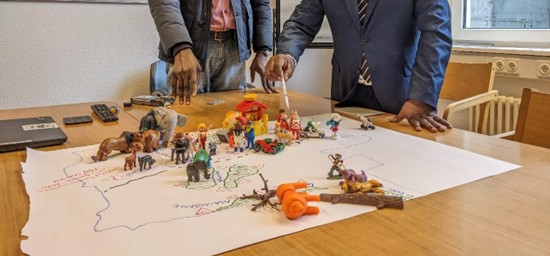
When we started our collaboration in 2022, we facilitated important discussions on how conflict was affecting WWF’s efforts and how offices were already responding. The four teams identified ways to strengthen their existing practices and designed practical next steps. These discussions also led to cross-country exchange, learning and capacity-building, making the most of the existing expertise on conflict sensitivity and environmental peacebuilding.
Two Country Directors from Fragile and Conflict-Affected Situations (FCAS), led a network-wide working group to assess WWF’s work in contexts of conflict and instability, and to identify recommendations for the future. This initiative was brought into the partnership with us to make the most of the synergies across different efforts.
We have remained engaged to accompany the different strands of work and inject technical expertise, where useful. We also leverage our connections into the broader ecosystem of environment and peace actors to support WWF’s efforts, identifying platforms where they can showcase their work, and connecting them to peers on issues of common interest and learning.
The Results
For WWF, conflict sensitivity has moved from a strategic ambition to a practical agenda across the network. In Colombia, integrating conflict sensitivity and environmental peacebuilding into a pilot initiative led to stronger local capacities for self-protection and participation for women environmental defenders in the Amazon. The learning has helped WWF adjust its operational practices.
In the DRC, conflict scans informed programme adjustments across WWF’s focus areas. WWF also strengthened its partnerships with CSOs and local communities to manage and transform conflict and promote conflict-sensitive livelihood activities as part of its conservation projects.
In Myanmar, the team integrated conflict sensitivity across core policies and strategies, including on gender equality, disability and social inclusion. WWF has continued strengthening conflict sensitivity skills across teams and with partners.
WWF Germany has played a key coordination role and, learning from the other teams, identified opportunities within its office for conflict-sensitive programming. It has also built alliances on conflict-sensitive and human rights-based conservation within its office and with other WWF offices that have fundraising potential.
At the network level, WWF has formally adopted the Operational Framework for working in FCAS contexts and created a new senior-level position to lead its implementation. It has also dedicated internal resources and staff time to produce a manual for the Network on conflict sensitivity and to start to roll it out.
Together, these results show how WWF is moving beyond biodiversity stewardship to become a trusted and respected actor in fragile settings. By doing so, WWF unlocks the potential of conservation for peaceful coexistence, stability, and shared responsibility for nature. With clear models emerging from this partnership, WWF is well-positioned to help reshape how conservation is approached in complex settings.
Conflict sensitivity is the first, critical step to peace-positive conservation - ensuring we not only ‘do no harm’ but actively strengthen stability and social cohesion in the world’s most vulnerable and biodiverse places. Working with PeaceNexus has been a rare true partnership, guiding and empowering transformational change that is being felt throughout the entire WWF Network.
Alison Harley, Director, Conservation in Fragile and Conflict-Affected Situations (FCAS)