Environmental degradation and climate change increasingly interact with threats to peace and stability around the world. Until now, most attention has focused on researching the links between climate, environment and conflict, while peacebuilding and conservation programming and practice remain relatively siloed. In 2019, we selected Conservation International (CI) as our first-ever partnership with an environmentally-focused organisation to help bridge this divide.
The partner
Conservation International (CI) is a large international organisation that works in 29 countries and with a network of more than 2,000 partners. It takes a comprehensive approach to conservation that includes scientific research, policy development, global mobilisation (including climate adaptation financing) and operational programmes with local authorities, indigenous people, civil society organisations and businesses. As part of its commitment to ensure human well-being alongside the protection of nature and the environment, CI has been exploring the linkages between its conservation work and peace and conflict issues since 2012. CI’s Center for Communities and Conservation (CCC) provides leadership and technical advice on integrating conflict and peace considerations across its work.
The process of support
The partnership between PeaceNexus (PN) and CI started in 2019 with a series of consultations and facilitation of an initial workshop and roadmap design process. CI defined its overall vision of success on this agenda as ensuring that conflict and peace issues are being considered integral to its conservation work, with attention and resources allocated to discussing, managing, and proactively addressing conflict as part of its mission to protect nature, global biodiversity and human well-being. Three specific objectives have guided CI’s conflict sensitivity integration efforts to date and PN’s support to those:
- Strengthening internal engagement on conflict issues across CI’s programmes and teams;
- Supporting the context-specific operationalisation of conflict and peace responses as part of the conservation work of a number of pilot countries;
- Influencing the broader conservation sector to support the funding and implementation of conflict-sensitive conservation and environmental peacebuilding work.
Results to date
CI has made impressive progress on all three objectives. Awareness within the organisation has grown of the relevance of conflict issues to CI’s work, and the extent to which this is a common challenge in country programmes. The CCC team has provided capacity-building and technical advice on conflict sensitivity to several country and thematic teams, including through projects and funding proposals with CI Peru and fellowship support to CI Kenya partners. Demand continues to grow for such internal collaboration. CI also made available – from PN support – small grants that enabled three country programmes in Brazil, China and New Caledonia to undertake specific conflict sensitivity initiatives. Those focused on different challenges, such as building conservation staff skills on conflict mediation, using conflict analysis to inform community engagement around a national park, or bringing conflict sensitivity to the Natural Climate Solutions framework. The work undertaken in country programmes has been an important driver of learning for CI on what the conflict and peace agenda looks like in practice and has helped support successful funding applications for more of this work. The CCC staff has also collaborated with other teams to bring a conflict lens into cross-organisational policies and tools. Externally, CI has actively shared learning from its work with the wider sector and consolidated its reputation as a lead agency on conflict-sensitive conservation and environmental peacebuilding.
Way forward
In the third phase of the PN-CI partnership, the focus will be on securing increased resources for integrated conflict, peace and conservation work, while scaling up engagement with country and thematic teams on these issues. CI also wants to solidify the visibility of conflict and peace issues within the organisation and to the rest of the sector.
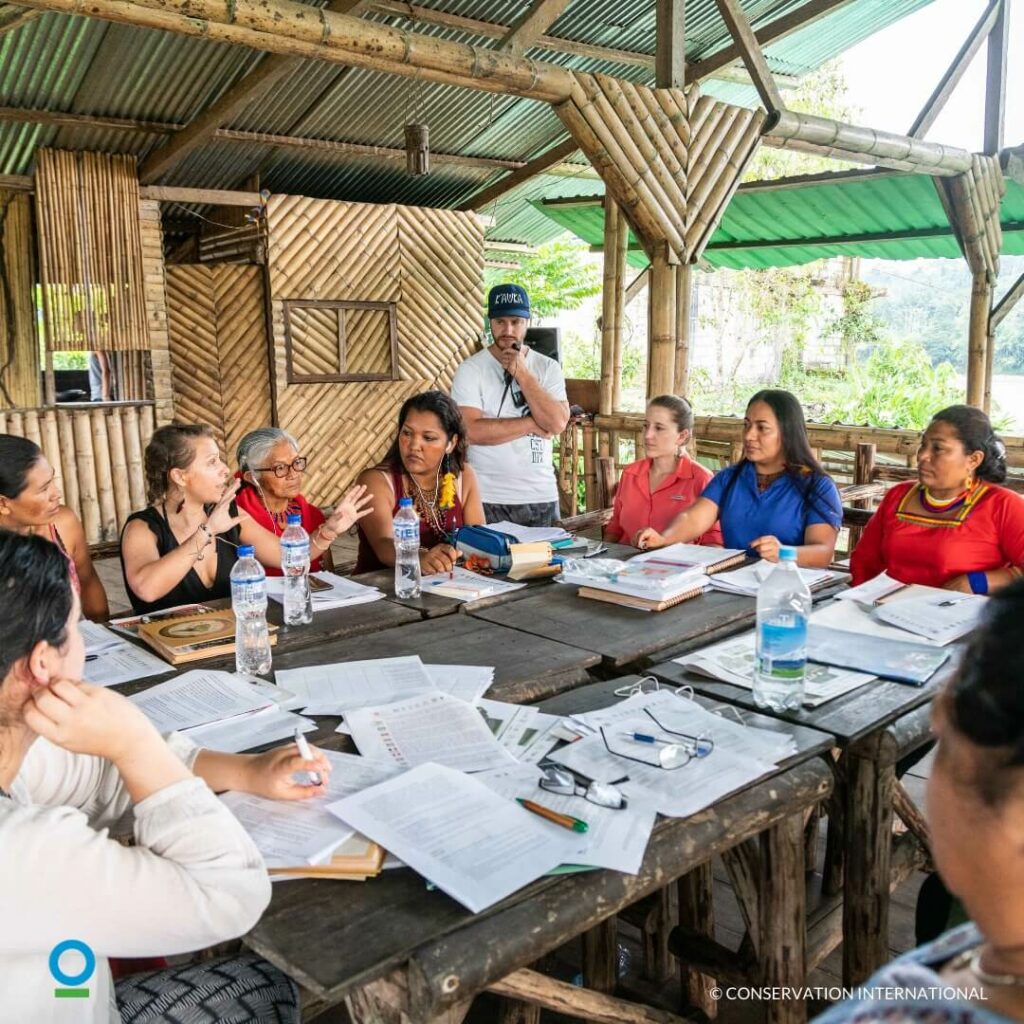
Photo credits: 1) Pete Oxford, caption from CI – Essequibo River, Longest river in Guyana, and the largest river between the Orinoco and Amazon. Rising in the Acarai Mountains near the Brazil-Guyana border, the Essequibo flows to the north for 1,010 km through forest and savanna into the Atlantic Ocean. 2) Esteban Barrera, CI, caption: facilitated the inaugural gathering of the Women’s Council of the Amazon, marking decades of hard work to bring about a cultural shift so the voices of women can be heard.