PeaceNexus was born from the complementary visions of Anne Gloor and Hansjörg Wyss. Anne Gloor wanted to connect peacebuilding actors, facilitate dialogue among them, and enhance their capacities to prevent conflict; Hansjörg Wyss aimed to harness the power of philanthropy to make this happen. Together they created a new kind of organisation to unlock peacebuilding potential.
Established in 2009, the PeaceNexus Foundation is the realisation of these two visions. From the outset, it aimed to:
- Strengthen changemakers and innovators in peacebuilding
- Assist organisations to address peacebuilding challenges, particularly at local and regional levels
- Foster collaboration between peacebuilders
- Promote the role of business in peacebuilding
These founding objectives still drive our work today.
Our success depends on our ability to strengthen leaders and organisations to foster partnerships and respond to peacebuilding challenges.
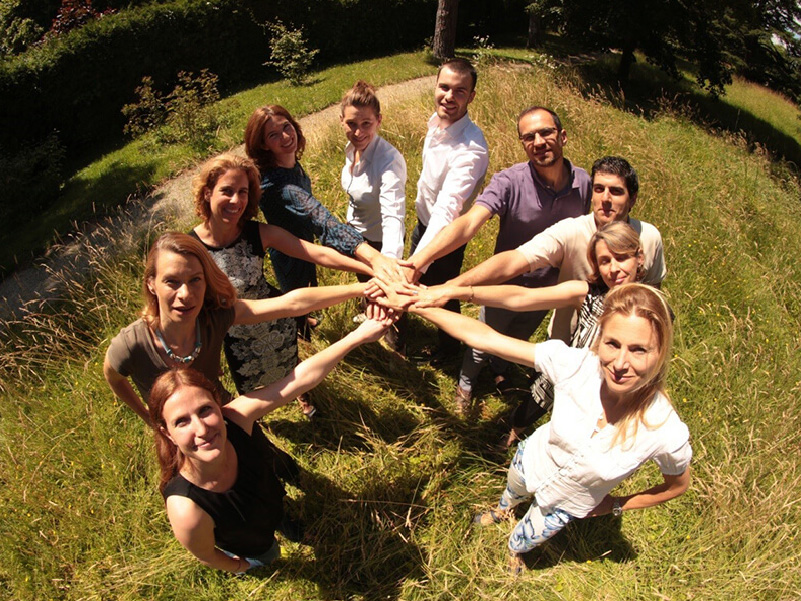
To better support our partners and develop our services, from 2014, we restructured and grew:
- We increased support for local actors in four priority regions — Central Asia, South East Asia, West Africa, and the Western Balkans — and aligned our work around regional priorities.
- We expanded our partnerships with international organisations, including inter-governmental organisations, international non-governmental organisations and businesses.
- We concentrated our advisory services in three areas: Organisational Development for groups with a peacebuilding mandate; Conflict Sensitivity for organisations working in conflict-affected contexts; and Business Engagement to strengthen dialogue between business actors, communities and governments on issues of common concern.
In 2014 Catriona Gourlay was appointed Executive Director of PeaceNexus. Over the following five years the staff doubled to 20, with the majority based in our focus regions. We worked with over 100 consultants annually to support our partners, and grew the proportion of consultants based in our focus regions.
In 2019 we took stock of our first 10 years, commissioning an external organisational review and partner surveys. These reviewed over 130 partnerships, identified key achievements, assessed our services and offered insights for future learning and adaptation.
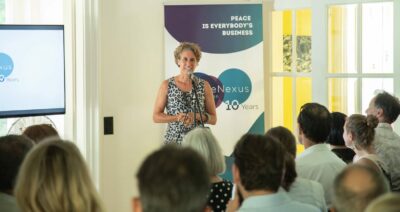
We celebrated our 10th birthday together with board members, collaborators and friends. For this occasion, we showed the PeaceNexus anniversary video featuring a selection of our regional partners who are doing courageous and important work in Kyrgyzstan, Niger, and Bosnia-Herzegovina.
Like many of our partners, we have been shaped by our responses to external shocks over the past five years. These shocks included the global Covid-19 pandemic, coups, increased conflict in many of our focus countries, and rising inter-state conflict, notably in Ukraine and the Middle East, which has undermined international security, law, and foundational normative frameworks.
In response to increasing insecurity in some of our focus regions, we chose to remain engaged. We did so both out of solidarity and because we recognise that our partners help prevent the escalation of violence and bolster local governance and social cohesion, even in the most challenging environments. We adjusted our approach and supported our partners in pivoting their strategies and adapting their operations when necessary. We also managed heightened risks by adapting the way we work and with whom we collaborate, expanding engagement with partners operating regionally or based in neighbouring countries.
Drawing on context changes and external reviews of our organisation and programmes in 2022, our 2023-2026 strategy enhanced our nexus role in two ways. Firstly, we increased our support for collective initiatives and coalitions across all programmes. These serve to respond to shifting contexts by sharing learning and building coalitions of mutual support and aligned action. Secondly, we expanded our work at the nexus of peace and the environment. This helps environmental organisations work effectively in conflict-affected contexts and supports pioneering environmental peacebuilding practices.
We are committed to our organisational development in the way that we ask our partners to be. We set internal strengthening objectives in our strategy to improve how we work, and we continue to invest in our governance. We have renewed the composition of our Governing Board and adapted our ways of working to strengthen the Board’s role in providing accountability and supporting our learning, adaptation, and financial sustainability.